
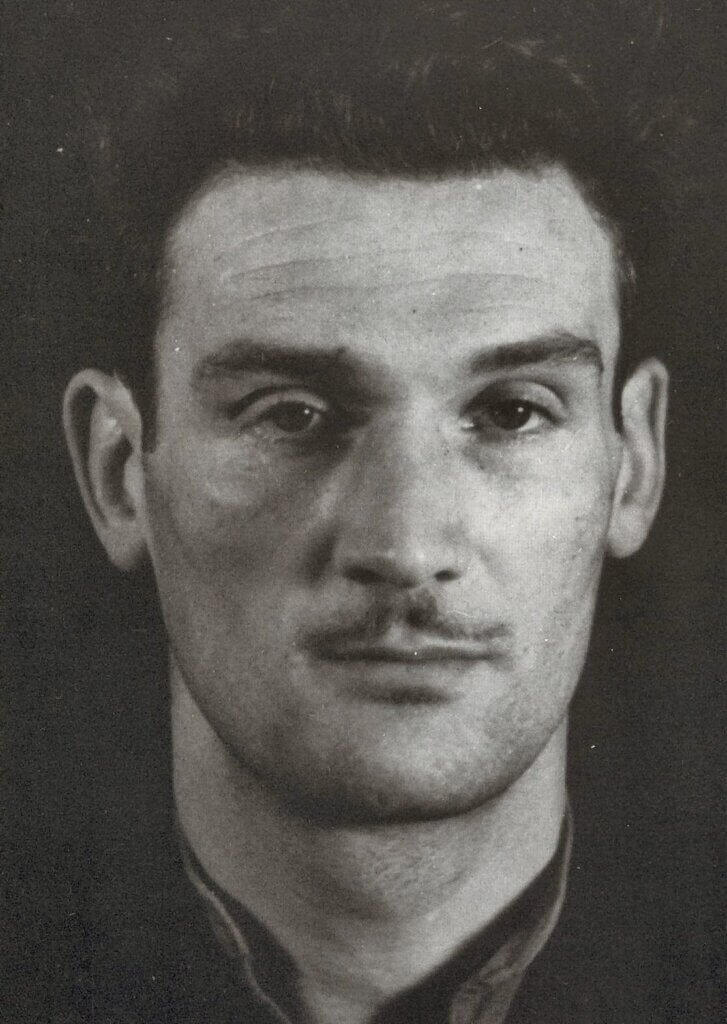
The Second World War has created dozens of incredible stories of British servicemen and their heroics. But what if those heroes happen to be from the wrong side of the law?
“Gentle” Johnny Ramensky and Eddie Chapman are two of the most famous. While Gentle Johnny offered his services from his prison cell, it was fate that brought Eddie into the war.
Arnold Edward Chapman was born in Burnopfield, County Durham on the 16th of November 1914. Following a mischievous childhood he joined the army, however after 9 months he deserted the army while on leave. This ultimately led to his first prison sentence at the Glasshouse military prison in Aldershot, Hampshire and a dishonorable discharge. .
Following a second prison sentence for forgery he became involved with West End gangs where he perfected his safe cracking skills. The “Jelly Gang” used Gelignite to blow open safes.
The Jelly Gang were involved in some audacious heists including stealing an entire safe from a shop, transporting it to another location and blowing off the door. To get the safe, he posed as an employee of the Metropolitan Water Board to gain entry into the house next door. Next he demolished a wall dividing the two buildings and removed the safe via the house.
It was following another arrest for blowing up the Edinburgh Co-operative Society safe he fell into his spying career. The courts released him on bail and he fled to Jersey, where he was eventually arrested and jailed for two years.
Still imprisoned, the Germans invaded, and his spying career began. He convinced the Nazis he was willing to become a spy and after some training he was back off to Britain with orders to commit acts of sabotage.
On 16 December 1942, Chapman parachuted into Cambridgeshire near the small village of Littleport. British secret services were well aware of Chapman via decripted messages and were on his trail. The career criminal, still wanted in Scotland, ignored his orders from Germany and as soon as he landed, handed himself into the Police. Following interrogation from MI5 he was hired as a double agent.
One of the main targets assigned by the Nazis was an attack on the De Havilland aircraft factory in Hatfield. To keep his cover it was imperative the Nazis believed this attack happened. So on the evening of the 29th of January 1943 the sabotage was faked by the British. Following German reconnaissance his commanders concluded the attack was a success and he was returned to occupied Europe via Lisbon. Chapman was de-briefed, awarded the Iron cross and sent to Oslo in Norway to teach spying techniques. While here he secretly photographed and gathered intelligence on spies who stayed with him.
His final assignment for the Nazis was to enter Britain and report back to his command the accuracy of the V-1 weapons. He convinced his commanders the desired targets were being hit, when in fact the weapons were falling short. On 2nd November 1944 he was dismissed from MI5.
With the war over, Eddie Chapman returned to mixing with the criminal underworld and was once again well known to Police. This included gold smuggling in the Mediterranean.
It’s not known if he began safe cracking once again. However, thanks to his Nazi training, he did obtain more advanced knowledge of explosives. With this in mind, it is widely believed he did.
By the early 1950’s he had turned his back on crime and became a successful businessman. He made a number of TV appearances and published his biography that was later turned into the film “triple cross” in 1966. On the 11th December 1997 Eddie Chapman passed away due to heart failure.
Modern safe opening (or safe cracking) is a skill that takes years to learn and master. Should you be locked out of your safe, or require advice on what safe you need, contact Abbey Gate and we will be happy to help.