Fire doors are now considered to be one of the most important features of a modern building, including renovations.
Modern buildings are now required to be “compartmentalised”, this is where the various floors of a building are split up into sections using fire resistant materials.
Abbey Gate use our years of expert knowledge to survey buildings and carry out the required repairs. The following is a short guide to some of the products used on fire doors to help control the movement of flames and smoke.
New fire doors
Our locksmiths will install or replace all kinds of fire doors, and frames if required.
The fire doors we fit can either be self closing (communal) or lockable using Fire brigade locks. The fire doors we fit can either be FD30 or FD60 depending on requirements and are always made to British standard.
We make sure the new doors fit in with existing decorations and styles, the doors can also be glazed if required. We can get unusual fire doors specially made and alway try to get fire doors produced from sustainable products to help protect the environment.
Fire resistant glass
Abbey Gate will replace all kinds of fire resistant glass for internal doors and external dry risers (that are used by the fire service to get water into a building).
Using our suppliers we are able to match any existing glass, so the aesthetics are not affected. For Newbury, Reading and Maidenhead we will attend site and measure free of charge
Signs and labels
At Abbey Gate we can supply a wide range of fire warning signs to suit all budgets from low cost stick-on labels to high-end brass plates, all of which comply.
Aswell as signs for fire doors we also supply other safety signs for buildings such as the green fire exit signs and traffic signs.
Fire brigade locks
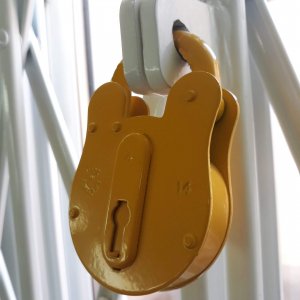
Our locksmiths supply and install FB1, FB2 and fire brigade padlocks. The locks are designed to limit access to the public while also allowing fast access for the emergency services.
In addition we can also supply spare keys to authorized people. The locks are keyed alike meaning (depending on the type of lock) one key will work all locks of the same type.
Drop seals
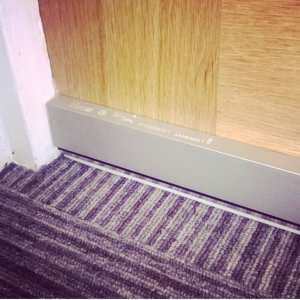
Drop seals have two key advantages. Firstly they help to prevent drafts coming through the bottom of a door which is key to fire control. Fire is fed by oxygen, so slowing the motion of oxygen (even for a small amount of time) can help reduce the intensity of a fire. Secondly’ fire gives off deadly smoke containing (among other substances) carbon monoxide (CO) and carbon dioxide (CO2). Sealing the gap at the bottom of a door reduces the movement of smoke, helping to preserve life.
Panic hardware
Exit hardware such as panic bars and exit paddle handles allow occupants of buildings to escape fast, while keeping the building secure. It is vital the hardware is fitted correctly to avoid mechanisms jamming when operated. To comply with health and safety legislation it is also vital the correct signage accompanies the hardware.
Intermittent strips
Intermittent strips are located around the edge of doors and are designed to expand when exposed to extreme temperatures and help to slow the movement of flames. Smoke seals are again found between the door and frame and help reduce the movement of smoke through a building. Intermittent pads can also be found behind hinges and FB (fire brigade) locks and are designed to operate in the same way.